What is Contemporary Style
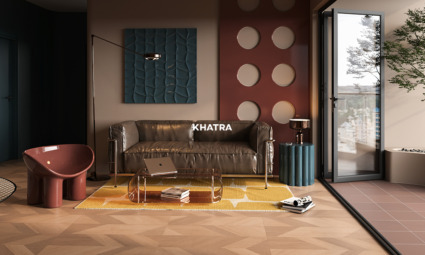
Contemporary style, technically speaking, is shaped right in the present moment and can change across different periods. But in a broader sense, contemporary style is an innovative shift from the rules of traditional interior decoration.
Simpler is better: sleek profiles instead of decorative mouldings, subtly patterned accent fabrics instead of colorful printed wallpapers, minimalist accessories instead of complex decorative sets. Contemporary does not bring the excessive warmth of older design styles, but neither does it make a room feel cold; it strikes a moderate balance.
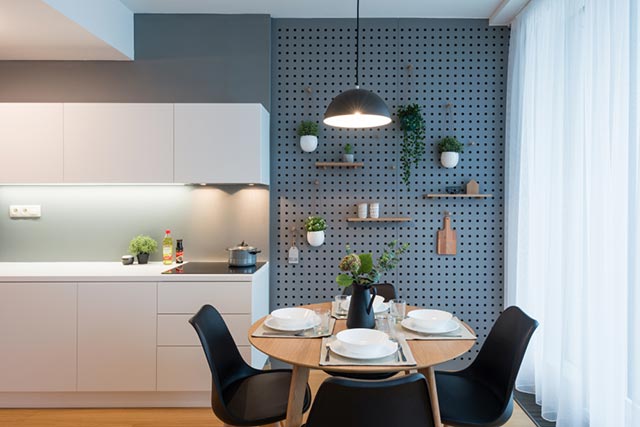
You will often hear the terms “Contemporary” and “Modern” used interchangeably, but in reality, these two terms are not entirely the same. The Modern style refers to a specific design movement that emerged in the early 20th century and adheres to stricter principles; while Contemporary, as mentioned above, is more fluid and allows for breaking the rules a bit to suit the present day.
Why Contemporary Style Endures
Emphasizing and focusing on lines and shapes—two essential elements of great design—Contemporary style always harbors a potential strength for refreshing living spaces. With the growing trend of people wanting to be closer to nature, rooms designed in this style always feature open, spacious layouts that maximize natural light, making the room airier and more expansive. In a Contemporary space, there is almost no obstruction to sightlines, with every small detail calculated meticulously upon placement.
Prominent Features of Contemporary Style
Simple Lines
A hallmark that is very easy to recognize in contemporary style: lines, planes, and angles. Contemporary design is oriented along a horizontal-vertical axis, from architecture to furniture. The spatial structure becomes an integral design element within its overall composition.
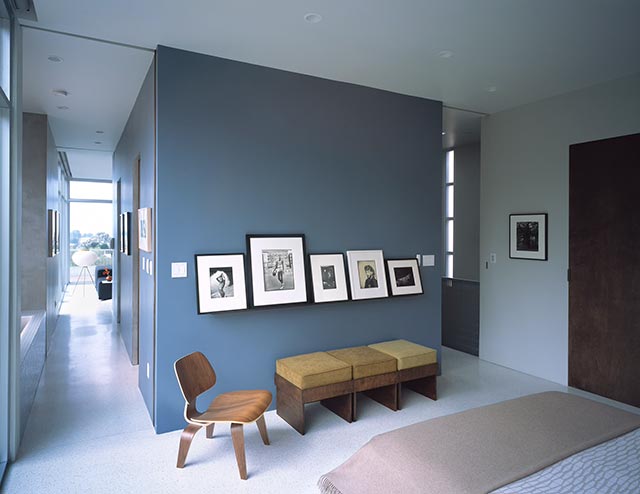
A chair, a picture frame, or even a rug features square geometric forms, with simple straight lines constituting the overall contemporary space. Does that mean everything in your home must have right angles? Of course not. Balance the visual aspect of the room with a few curves; the key is staying true to simple geometric shapes: circles, spheres, cylinders, waves.
Subtle Neutral Color Tones
Cream, white, brown, beige, black—these are the foundations of contemporary design. The clever arrangement of monochromatic colors allows lines and object blocks to stand out and become the visual focal point. Neutral is a rather broad term. Choose a darker area in the house with tones that add attention (such as the blue-grey in the image above). Try cream with a touch of pink, grey with a hint of green, or beige with a splash of yellow.
See more matte tiles to explore neutral color tones for flooring.
Open Space
In contemporary style, open space helps ensure the overall look feels like a sculpture, allowing every line and furniture block to stand out more clearly.
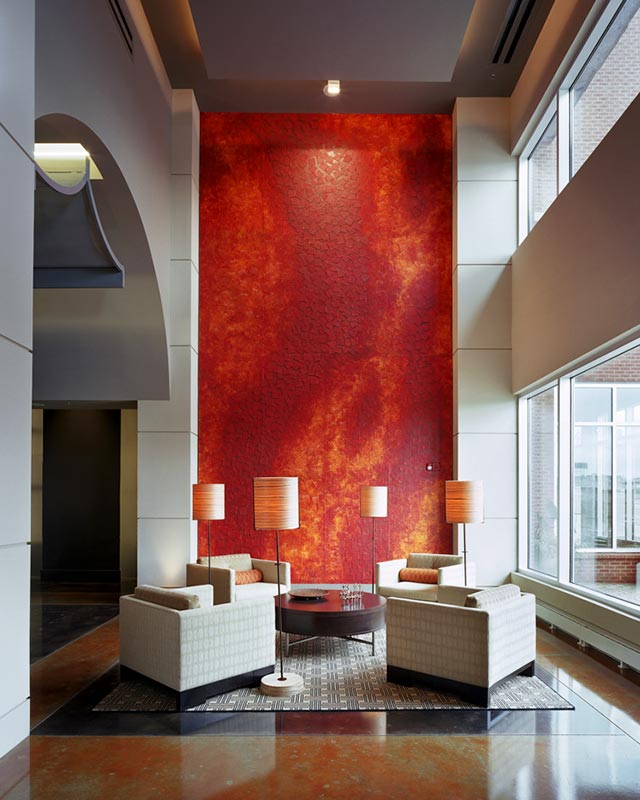
An open interior space characterized by simplicity and minimal lines can often make a room feel empty and barren. Therefore, dividing furniture into smaller groupings will help break up the space of a larger room. Chandeliers or lighting fixtures suspended down from the ceiling can visually lower ceiling height, preventing the space from feeling too diluted.
Bare Flooring
If you love the sensation of bare feet on cool tiles, Contemporary is the right style for you. Contemporary design avoids wall-to-wall carpeting or excessive rugs to keep the floor surface sleek and smooth. Naturally, for seating areas in the living room, you can use an area rug to protect the floor tiles. Or, if a decorative rug is essential, choose one with a color tone that matches the floor and surrounding furnishings.
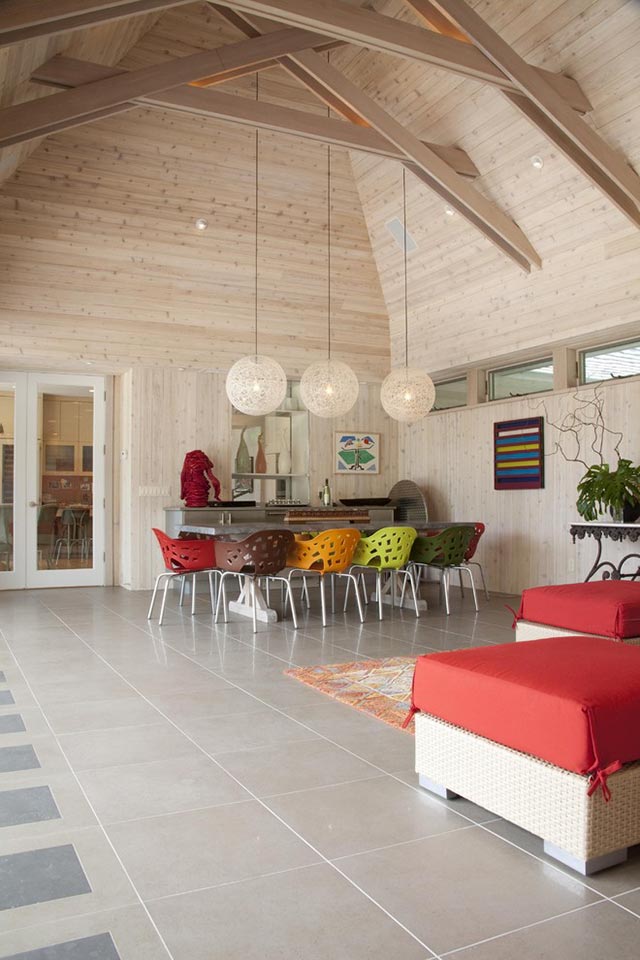
If you are looking for floor tiles that are bright, glossy, durable, on-trend, and naturally a perfect fit for contemporary style, you can check out: Microcrystal tiles – a type of tile with a special structure and quality far superior to traditional tiles.
Reflective Light
Contemporary rooms would be nothing without glossy items. Chrome, steel, lacquer, glass, etc., will bounce ambient light around. Using items that combine multiple reflective materials will enhance contrast and depth.
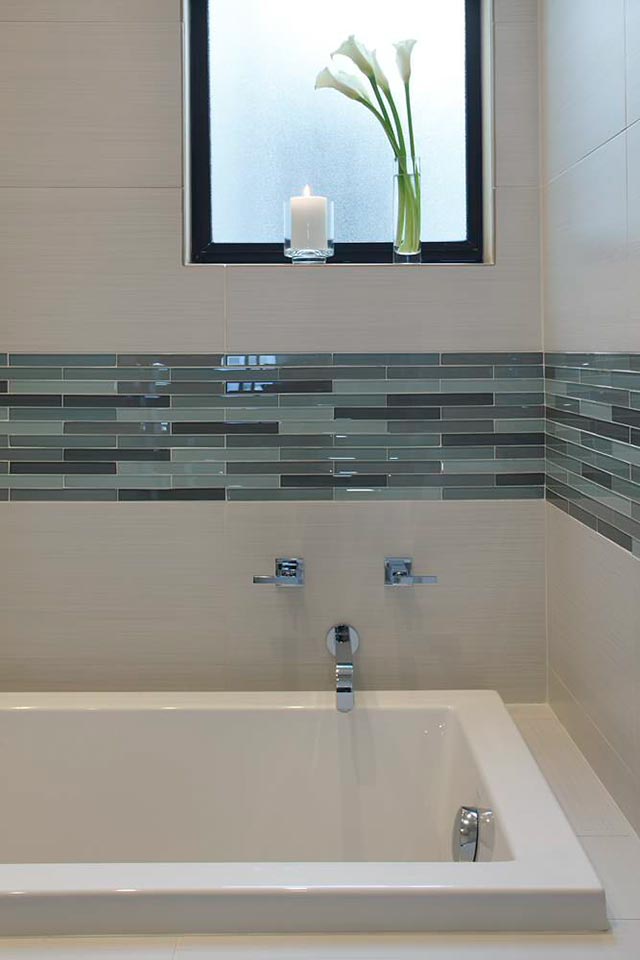
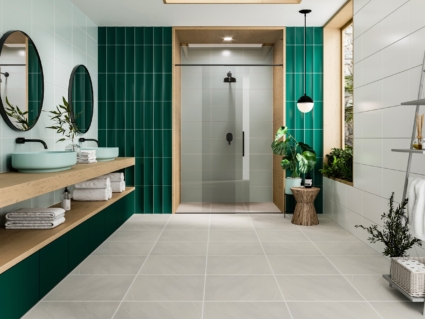
Please note not to overdo this; too much reflection can cause a counterproductive and harsh glare on the eyes. Spread out reflective sources instead of grouping them all in one spot. For example, the bathroom above is clearly divided into 3 reflective zones: the window section, the mosaic tile section, and the bathtub alongside chrome materials.
Windows at the Center
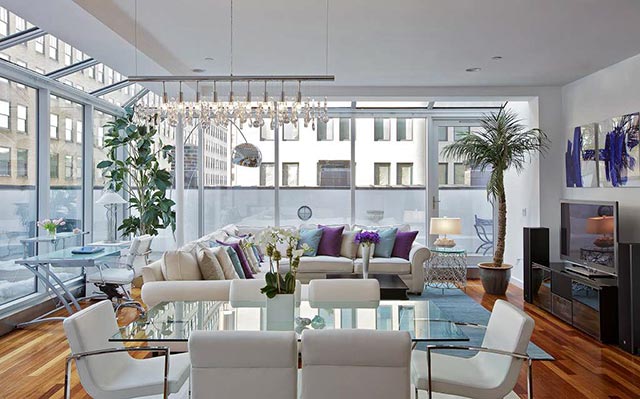
Can you imagine pleated curtains being used for the window area in this space? You simply cannot use them in this case. Large windows are very common in contemporary spaces and are typically left bare of fussy treatments like heavy drapes to highlight strong architectural lines and let natural light flood the room.
If privacy is a concern, or if you prefer a subtle touch, try incorporating understated decorative elements that do not create visual stops, maintaining continuity while preserving openness. Sheer fabrics or solid panels matching the wall color will help you retain privacy when needed without acting as an eye-catching focal point.
Minimalist Accessories
As stated from the beginning, “Simpler is better”—and you can see why, right? Avoid clustered decor groups, clutter, and low-value knick-knacks; keep home furnishings simple, minimal in quantity, yet carefully curated. In this type of minimalist arrangement, every single detail contributes to an artistic composition within the home while maintaining a well-ordered sense of design.
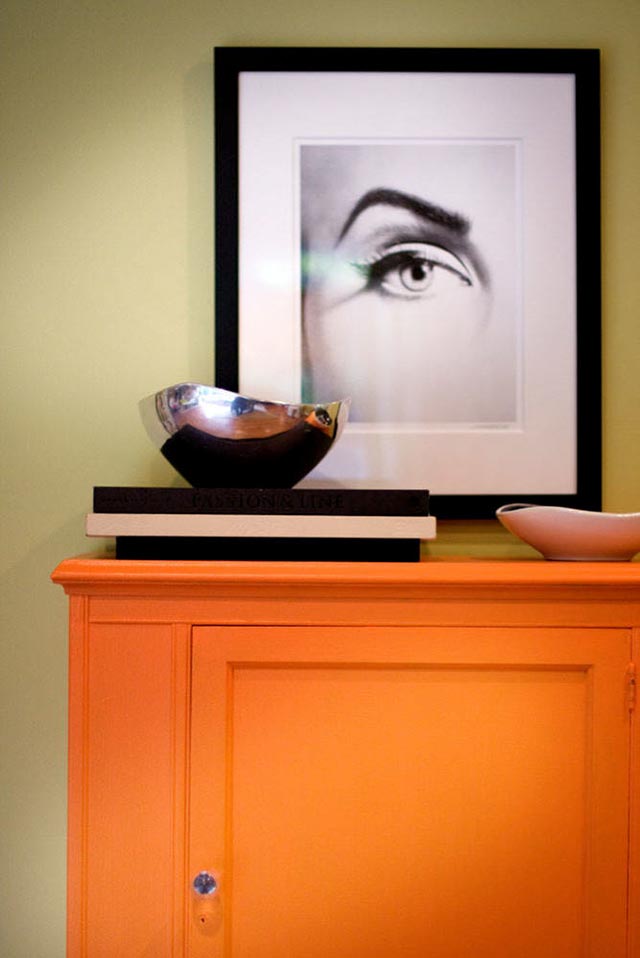
Oversized Art
Open, expansive, and airy spaces are hallmarks of Contemporary style, which makes large, expansive walls a common sight. These provide the perfect backdrop for large-scale art pieces, standing out with gallery-style simplicity. A cleanly framed oil painting, a streamlined sculpture, black-and-white photography, glass art, or prints also work exceptionally well in this setting.
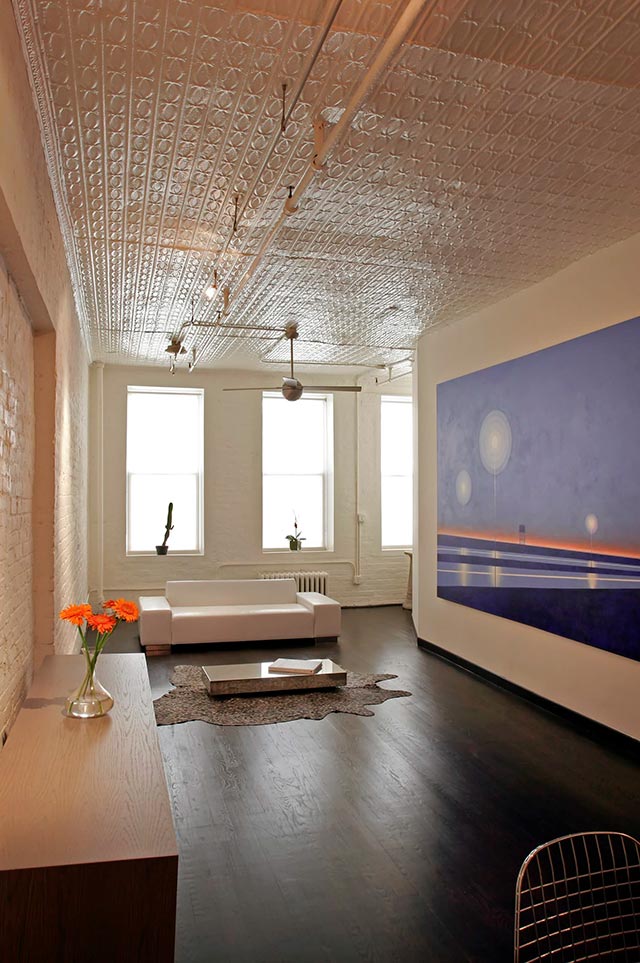
The only small note is that the arrangement of large-scale artworks must also remain minimalist, avoiding overly complex details or clustering too many artworks on a single wall, which distracts from the focal point.
Contemporary interior design style consistently brings a fresh feel to a home thanks to its ever-evolving nature that keeps up with trends, adding a touch of flair by blending with other modern design styles. And always remember: simpler brings timeless beauty to a contemporary space.
Source: Houzz