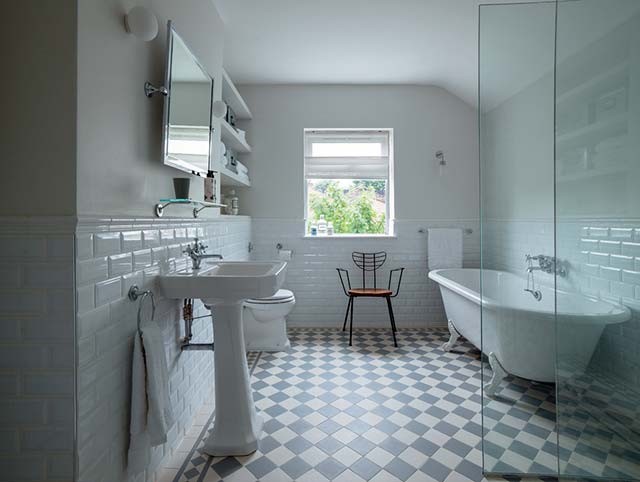
For enthusiasts of decorative tiles, having as many tile varieties in the house as possible seems ideal. However, combining different types of tiles requires subtlety and a keen aesthetic eye to achieve the best results. As you know, each type of tile suits a different interior style, and combining them without care can make the space feel cluttered and overwhelming. Below are 9 helpful tips to help you mix and match tiling options to make your home more perfect, logical, and sophisticated.
1. Balance intricate patterns
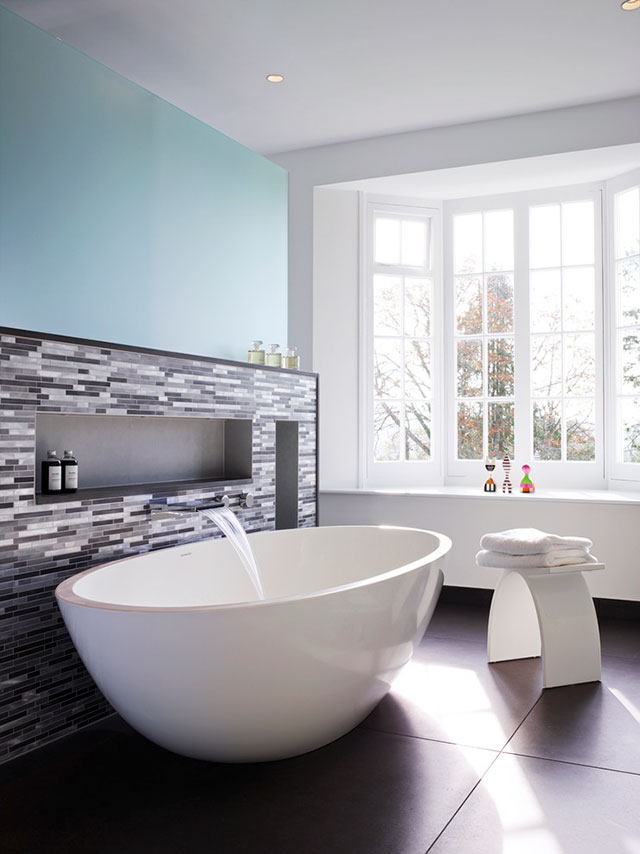
Using small-patterned tiles, such as rectangular mosaic tiles, to create an accent on the kitchen backsplash or in small areas is more refined than using them throughout your entire room. Pair them with large, minimalist plain tiles to avoid a visually chaotic and overwhelming feeling.
2. Pair patterns with plain tiles
Limit the use of patterned tiles to a single surface – a great tip is that the floor or an adjacent wall should be decorated differently to create an interesting visual effect. Here, hexagonal floor tiles serve as the main focal point, while large rectangular wall tiles create an airy space filled with light.
3. Pay attention to scale
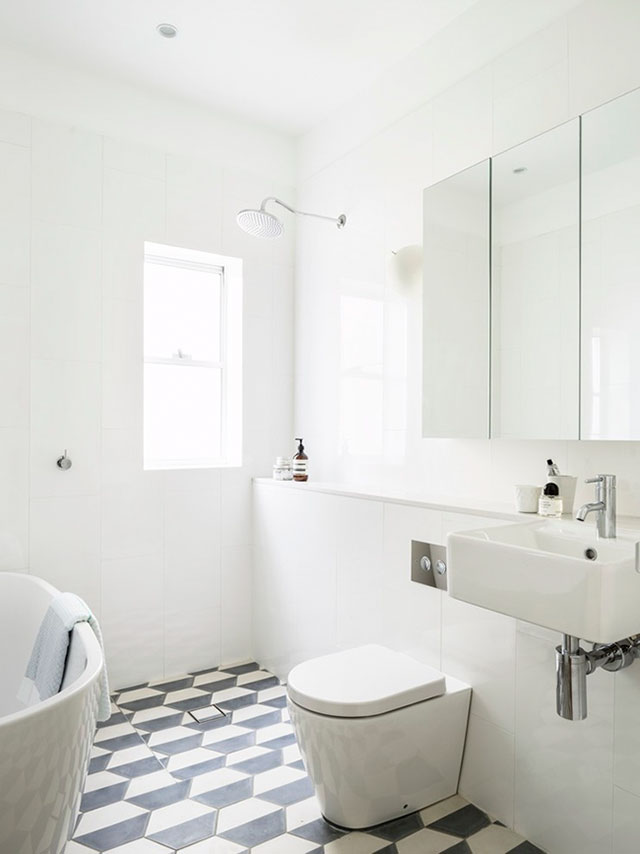
One key tip for effective tile pairing is creating harmony by combining tiles of different scales. In this bathroom, three types of tiles are successfully combined: small-scale hexagonal mosaic tiles on the bathtub and wall, medium-sized hexagonal tiles surrounding the vanity, and large rectangular tiles on the floor. The monochrome palette helps create a balanced and harmonious overall bathroom look.
4. Use natural stone to bring balance
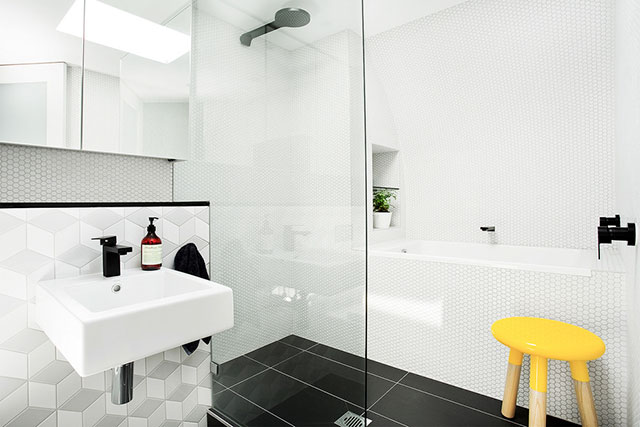
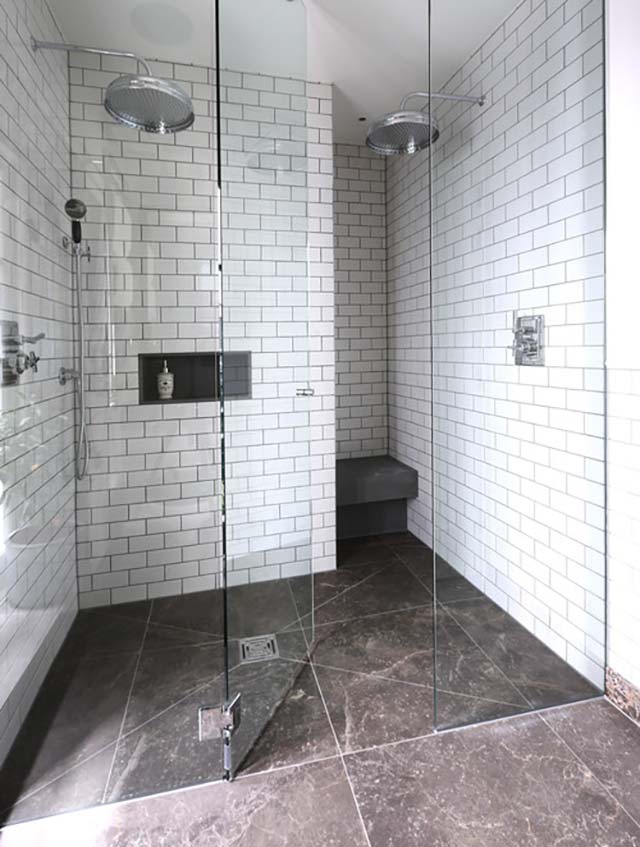
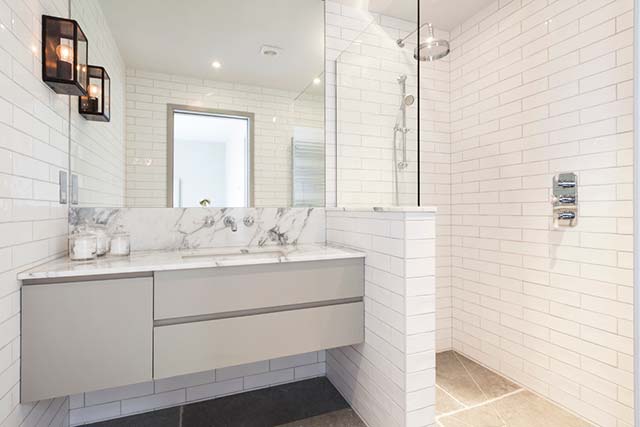
In the design below, white subway tiles run from floor to ceiling with grey grout, creating a striking statement for this large bathroom. To soften the grout lines and unify the overall design, grey natural stone is introduced to harmonize every detail, enhancing visual interest through the neutral, balanced qualities of natural stone veining.
5. Combine textured surfaces
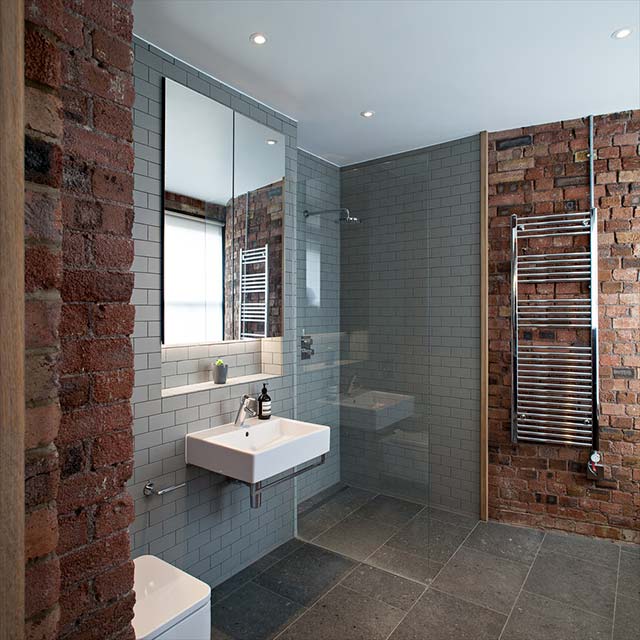
To elevate tactile sensations throughout the bathroom, try combining two textured surfaces to zone the spaces, such as this exposed brick wall paired with a monochrome painted wall. It will certainly make for an exciting and unique experience!
6. Mix Matte & Glossy
Gone are the days of using identical tiles in size, shape, and color for both walls and floors. Try choosing matte tiles for the bathroom floor to provide a grounded feel, and glossy wall tiles like subway tiles to make the space feel larger and more pleasant.

See also: decorative cement tiles for bathrooms
7. Same color tone, different shapes
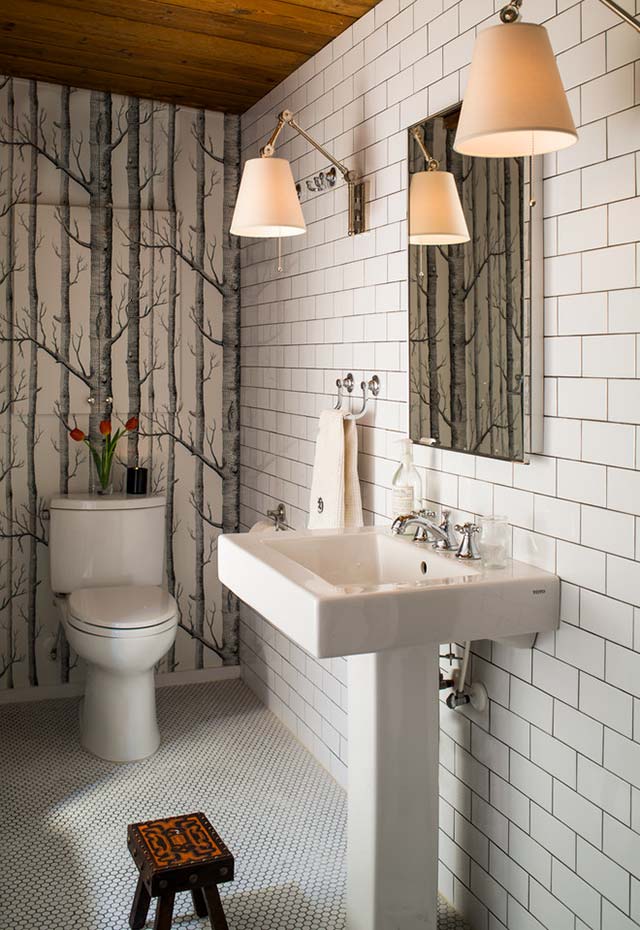
For a simple yet effective pairing in any space, use two types of tiles in the same color but with different shapes (for example, the image below uses white subway wall tiles and small white hexagonal floor tiles). Matching grout color for both the floor and walls creates continuity. The space becomes striking and engaging while still maintaining an unbroken flow throughout.
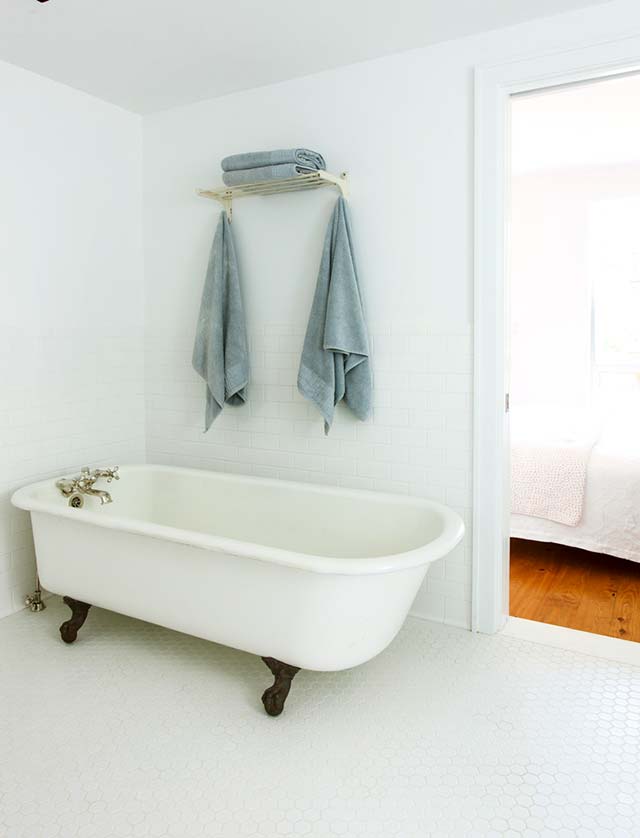
Additionally, if your bathroom space is compact and you want to showcase subtle charm without being too loud, you can match the tile color with the grout color (white), as shown in the example below.
8. Maintain pattern consistency
Use tiles of different sizes and colors, but keep consistent textures/patterns to create balance and harmony in the room. This bathroom uses grey subway wall tiles and plain grey floor tiles; by keeping the materials visually cohesive, it establishes an effortless visual connection and stylistic unity.
9. Limit the color palette
For bathrooms with multiple surfaces, avoid using too many colors to prevent visual clutter. The advice here is to use colors within the same tone; for instance, in the design below, sticking strictly to grey and white tones brings an elegant and sophisticated feel to the entire room.
Translated source: houzz.com