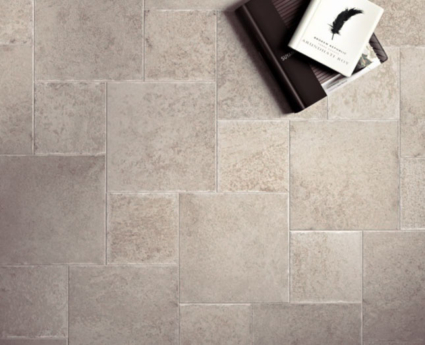
KHATRA – Providing formulas to calculate tile square meters and the quantity of tiles to purchase, making it easy to estimate budgets and buy the exact amount of tiles needed, avoiding excess or shortage of tiles
With over 10 years in the tiling industry, KHATRA has encountered many cases where customers wonder how to accurately calculate the quantity of tiles for their area. If you are also looking for a square meter calculation method for tiles, do not miss the article below.
Accurate calculation helps homeowners easily estimate tile purchasing budgets and buy the exact quantity needed, avoiding significant excess or shortfalls of a few tiles that cause difficulties during project completion.
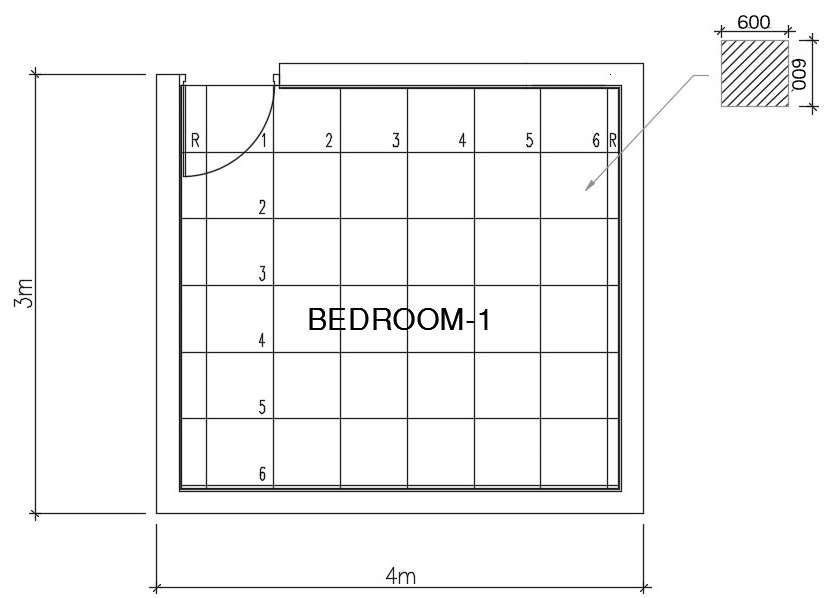
How to calculate floor tile square meters
To calculate the quantity of tiles, first, you need to know the exact area of the tiling surface. For walls and floors without openings, the area can be easily calculated using the formula: A = Length x Width.
For floors and walls with openings such as windows, or any built-in furniture that does not require tiling, the area is calculated using the formula: A (to be tiled) = A (wall/floor) – A (openings).
Next is the area of 1 tile using the formula: A = length x width.
Finally, we can determine the quantity of tiles needed: Qty = A (to be tiled)/ A (1 tile).
1. How to calculate floor tile square meters
1.1. Interior
For floor tiles in living rooms, bedrooms, kitchens, or bathrooms, the tile size should be chosen based on the room width before calculating the required tile quantity.
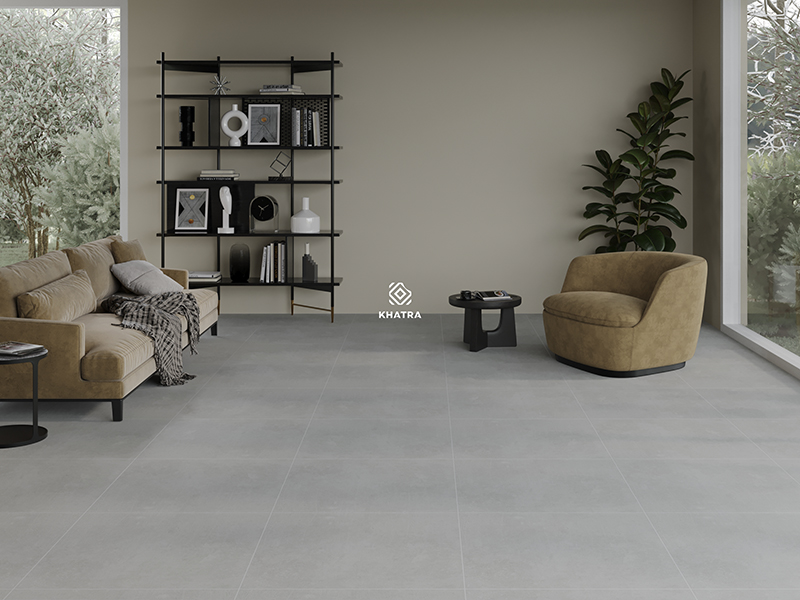
GM6706 600×600 living room floor tiles
For small apartments with a room width under 4m, homeowners should consider choosing 600×600 mm floor tiles; this yields about 6.5 tiles across the width, which is well-balanced. This avoids having too few tiles making the room feel smaller, or too many tiles causing a cluttered floor surface.
Example: Need to tile a floor with an area of 24m2 (6×4), using 600x600mm tiles (area: 0.36m2).
The required tile quantity will be: Qty = 24m2 / 0.36m2 = 67 tiles.
Each box of 600×600 tiles usually contains 4 tiles. Therefore, the customer needs to purchase around 17 boxes.
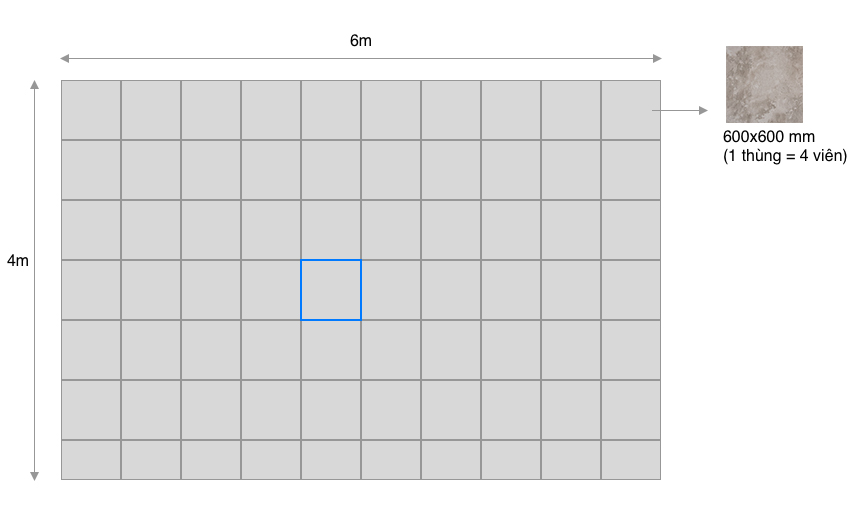
Calculate 60×60 floor tile quantity
Similarly, for larger apartments with a width ranging from 4-6m, you can totally use 600×600 tiles, but 800×800 mm floor tiles would be more suitable.
Example: Need to tile a floor with an area of 30m2 (6×5), using 800×800 mm tiles (area: 0.64 m2).
The required tile quantity will be: Qty = 30 m2 / 0.64 m2 = 47 tiles.
Each box of 800×800 tiles usually contains 3 tiles. Therefore, the customer needs to purchase around 16 boxes.
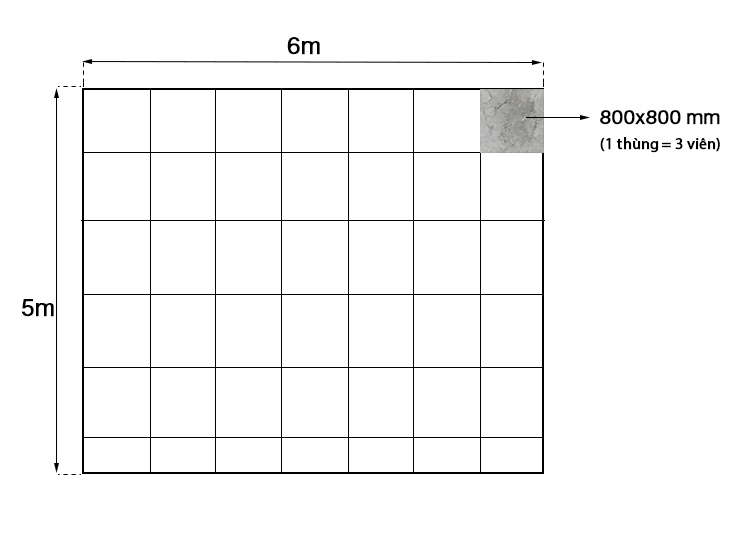
Accurate calculation of 800×800 floor tile area
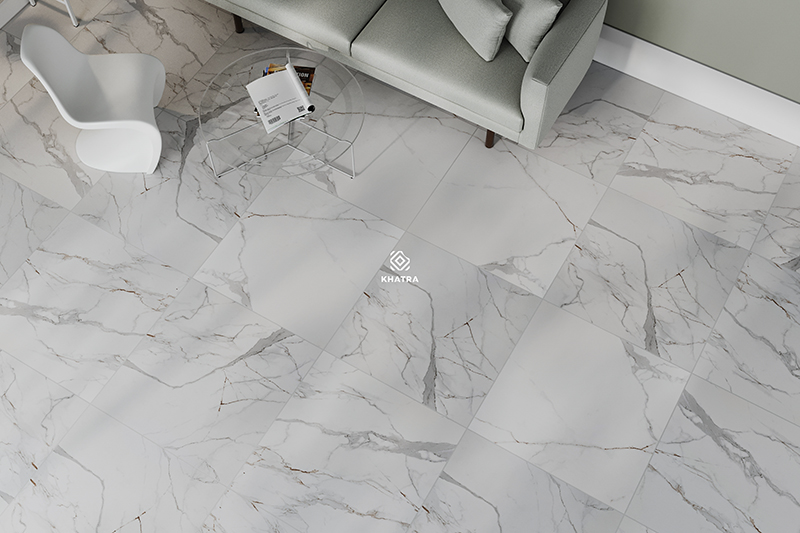
Calculate square meters of 800×800 KR-80M7033 living room floor tiles
For townhouses, villas, or spacious commercial spaces with a width exceeding 8m, 600×1200 mm large format tiles will be the perfect choice to accentuate the spaciousness of your property.
Example: Need to tile a floor with an area of 60 m2 (10×6), using 600×1200 mm tiles (area: 0.72 m2).
The required tile quantity will be: Qty = 60 m2 / 0.72 m2 = 83 tiles.
Each box of 600×1200 tiles usually contains 2 tiles. Therefore, the customer needs to purchase around 42 boxes.
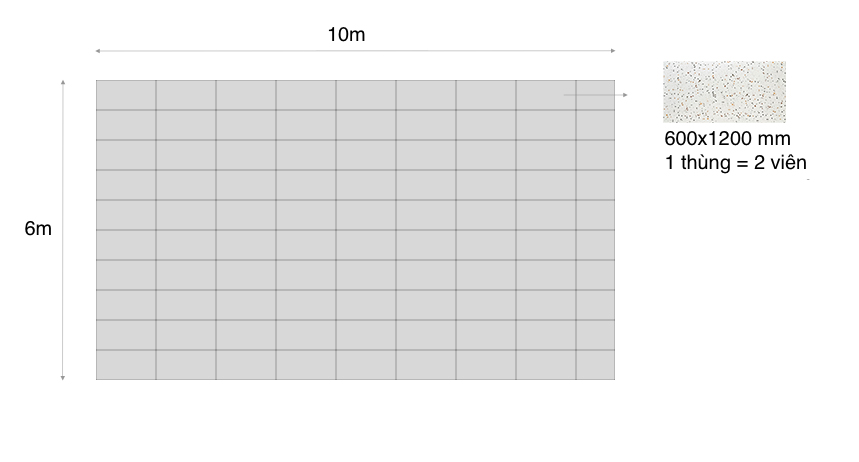
Calculate large format floor tile quantity
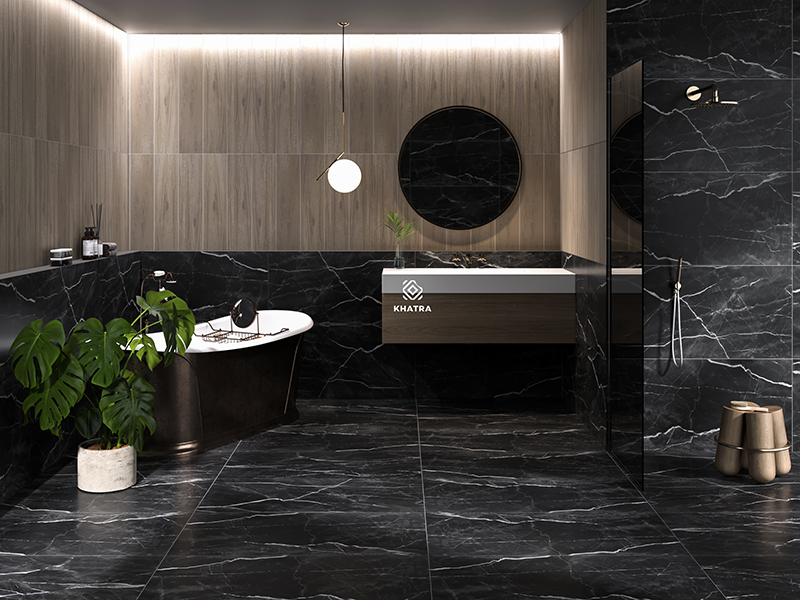
Calculate square meters of KR-612616D 600×1200 bathroom floor tiles
1.2. Exterior
Exterior tiles used for terraces, balconies, or gardens typically come in sizes of 400×400 and 500x500mm, featuring textured surfaces with excellent heat resistance, anti-slip, and waterproofing properties. Calculating the square meter area or quantity of exterior tiles is similar to interior tiles.
Example: Need to tile a terrace with an area of 15 m2 (5×3), using 500×500 mm tiles (area: 0.25m2).
The required tile quantity will be: Qty = 15/0.25 = 60 tiles.
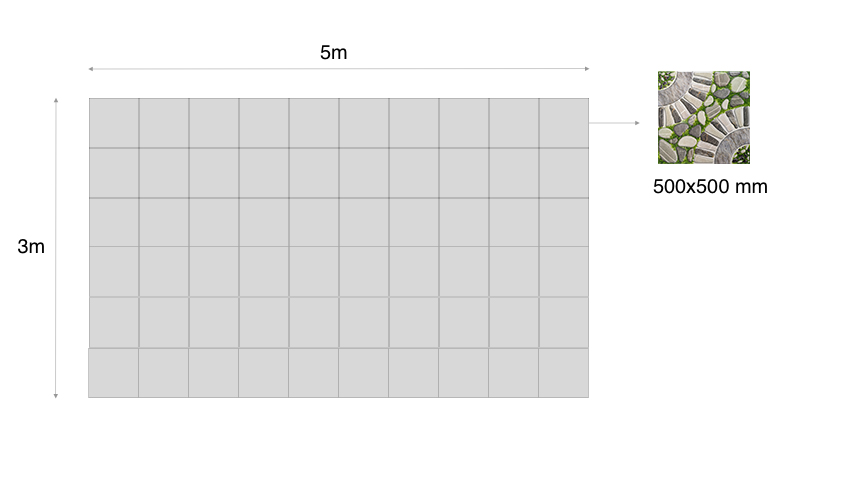
Quantity of terrace floor tiles
2. How to calculate wall tiles
Porcelain wall tiles are commonly used for bathrooms or kitchens, making them easy to clean, stain-resistant, and protecting walls to stay durable and beautiful over time. Currently, wall tiles are often chosen in 2 main sizes: 300×600 and 300×800 mm. The formula to calculate wall tile square meters is as follows:
Example: Need to tile a kitchen wall with an area of 2.5 m2 (5×0.5), using 300×600 mm tiles (area: 0.18 m2).
The required tile quantity will be: Qty = 2.5 / 0.18 = 14 tiles.
Each box of 300×600 tiles usually contains 8 tiles. Therefore, the customer needs to purchase around 2 boxes.
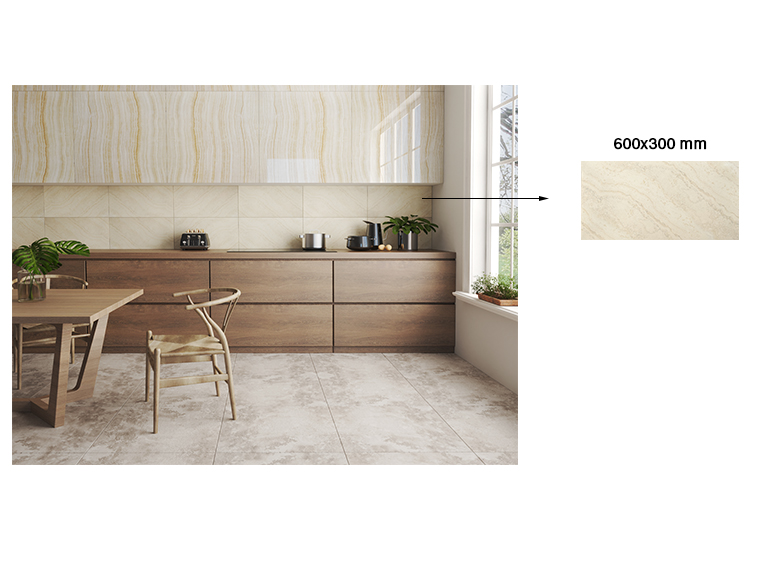
Kitchen wall tiling with 30×60 tiles
In addition, for wall tile sets that include decor/feature tiles, tiles should be used in a ratio of 25% dark tiles, 1 feature tile (for accent tiles), and 70% light tiles (calculated vertically along the wall).
Example: You need to tile an area with a height of 4m; a total of about 13 tiles will be needed, which corresponds to 4 dark tiles.
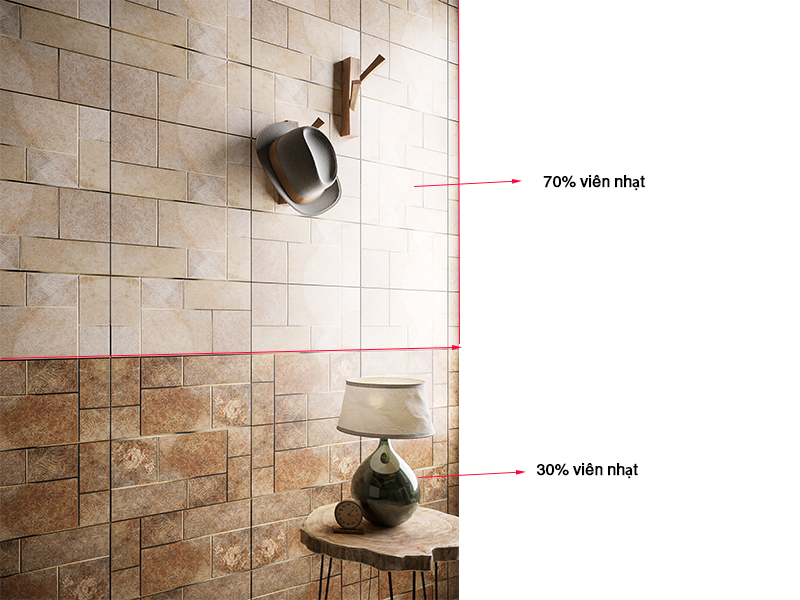
Wall tiling with dark and light combination
Calculating 300x800mm wall tiles is similar to the method for 300×600 tiles.
3. How to calculate wood-look tiles
Wood-grain tiles come in various sizes ranging from small sizes: 150×600, 150×800, 150×900 to longer planks such as: 200×1000 and 200x1200mm. The square meter calculation formula is similar to floor tiles; however, customers should add an extra 10% of tiles in case some wood planks are cut and the offcuts cannot be reused.
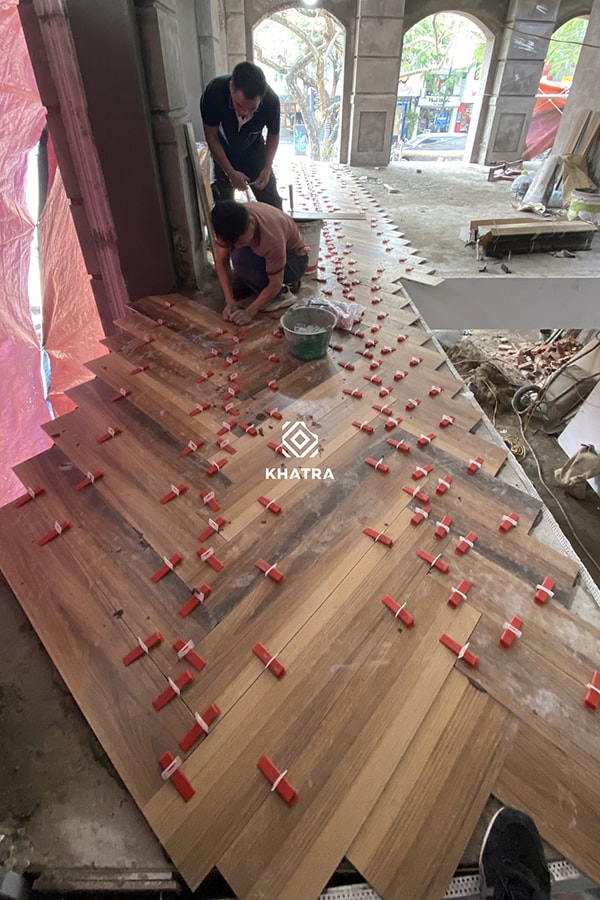
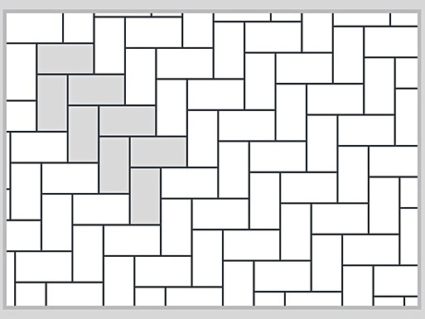
Calculate wood tile square meters for herringbone installation
Furthermore, wood-look tiles offer many creative combinations depending on each homeowner’s preference. For mixing plain wood and lettered wood tiles, the ratio is: 75% lettered wood tiles and 25% plain wood tiles.
Example: The area to be installed is 4*6=24 m2, using 150x800mm wood tiles (area per tile: 0.12m2).
The total quantity of wood tiles to buy is Qty = 24/0.12 = 200 tiles, so you will need 150 lettered wood tiles (15 boxes) and 50 plain wood tiles (5 boxes).
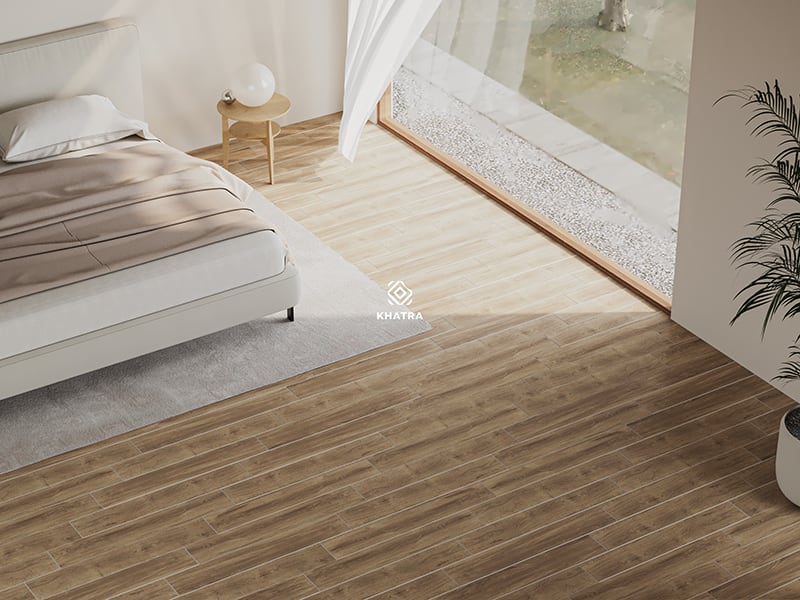
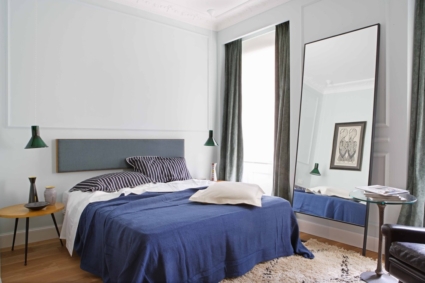
W96006 bedroom floor tiling
For combining wood-grain tiles with hexagon tiles for floor or wall tiling, the square meter calculation can be done similarly to above with a ratio of 85% wood tiles and 15% hexagon tiles.
Example: The area to be tiled is 2*4=8 m2, using 150×900 mm wood tiles (8 tiles/box) and 200×230 mm hexagon tiles (20 tiles/box).
The quantity of wood tiles is Qty = 8/0.135*85% = 51 tiles.
The quantity of hexagon tiles is Qty = 8/0.0345*15% = 35 tiles.
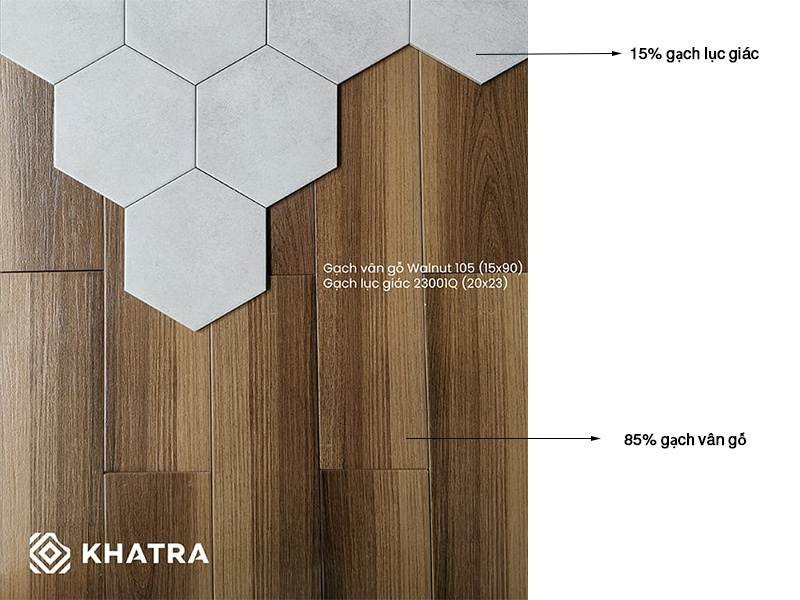
Combining wood-look tiles and hexagon tiles
4. How to calculate decorative tiles
4.1. Hexagon tiles
Hexagon tiles are commonly used for kitchen backsplashes, bar counters, bathroom floors, kitchens, living rooms, cafes… with dimensions of 200x230mm, an area of 0.0345 m2 per tile, and usually 20 tiles per box. The formula to calculate hexagon tile square meters is similar to calculating floor tiles.
Example: Need to tile a kitchen area of 6 m2 (3×2).
The required tile quantity is Qty = 6/0.0345 = 174 tiles (about 9 boxes).
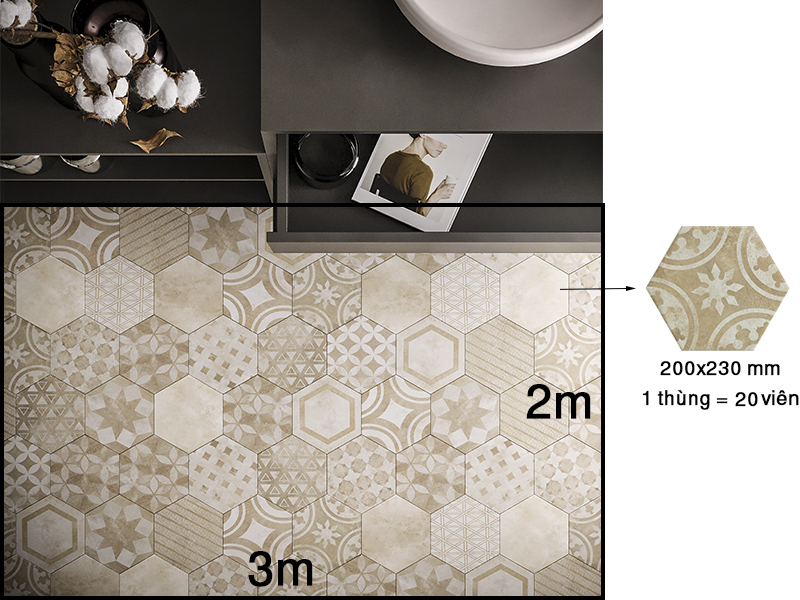
Calculate hexagon floor tile square meters
4.2. Encaustic cement tiles
Encaustic cement tile size is 200x200mm, with an area of 0.04 m2 per tile, typically 25 tiles per box, used for both wall and floor tiling. The calculation is simple, similar to hexagon tiles.
Example: Need to tile a kitchen floor with an area of 4*6=24 m2, subtracting the kitchen cabinet footprint that does not require tiling with an area of 2m2.
The area to be tiled is A (to be tiled) = 24 – 2 = 22 m2.
The quantity of tiles needed is Qty = 22/0.04 = 550 tiles, about 22 boxes.
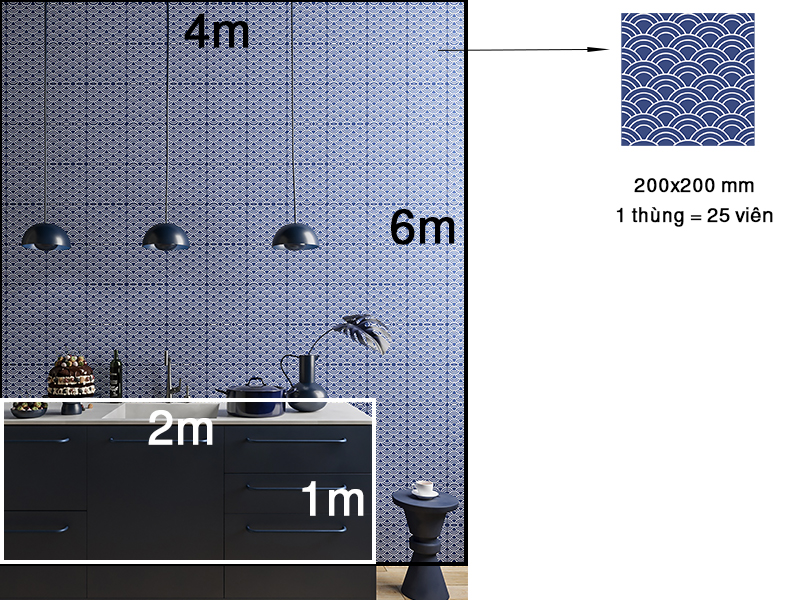
Calculate kitchen encaustic cement tile square meters
4.3. Mosaic tile sheets
Mosaic tiles are usually sold by sheets of 300x300mm; the method to calculate the required quantity/square meters is similar to square floor tiles.
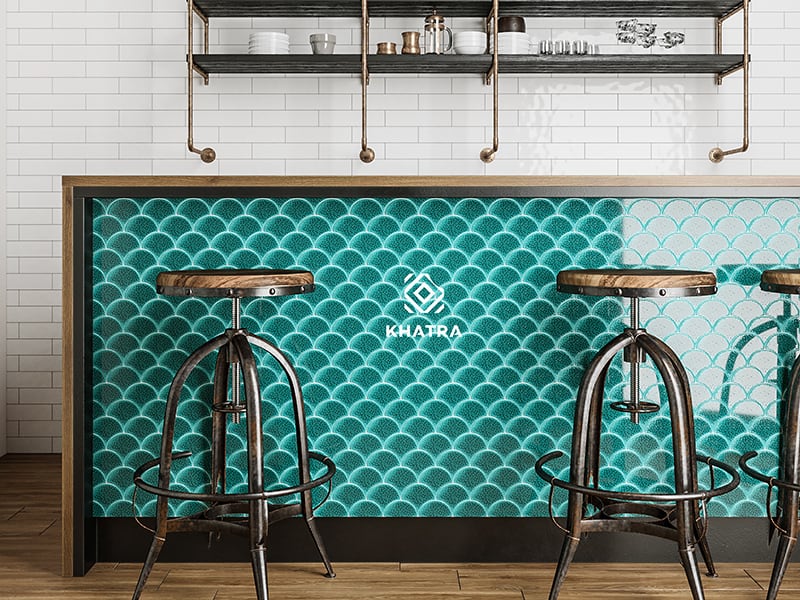
Teal fish scale tiles
4.4. Subway tiles
Subway tiles are often sold by square meter rather than piece count; therefore, homeowners only need to calculate the exact area to be tiled and determine the quantity to purchase.
Example: Tiling a 2 m2 kitchen backsplash using 50×200 mm subway tiles (area per tile: 0.01 m2)
The required tile quantity to buy is Qty = 2/0.01 = 200 tiles.
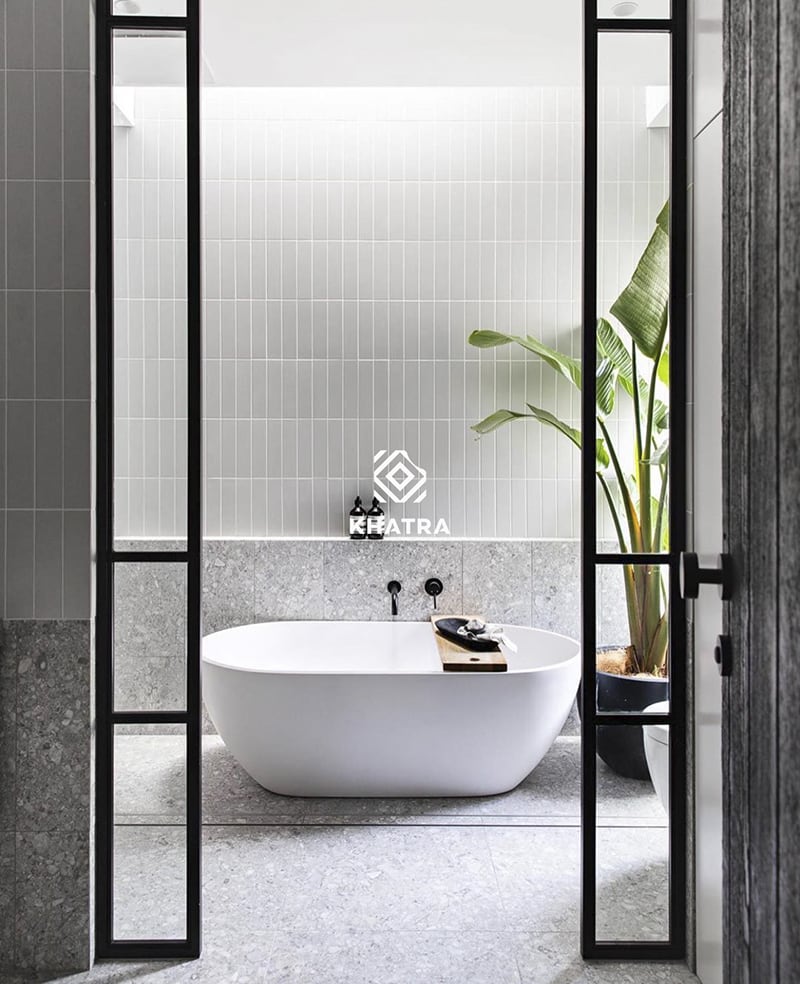
Calculate 50200 white subway wall tile square meters
Complete guide to calculating square meters and quantities for all types of tiles
Additionally, Khatra introduces customers to standard and beautiful tiling patterns for wood-look and subway tiles to complement your choices: Small Format Brick Bond, Stepladder, Horizontal Herringbone, Hexagon, Basket Weave,…
5. New tile models at KHATRA
Stay updated with best-selling, new floor, wall, decorative, and wood-look tiles in stock at the KHATRA warehouse with great pricing policies, high discounts, and free chip samples and tile textures for design and projects